

07/04/2026
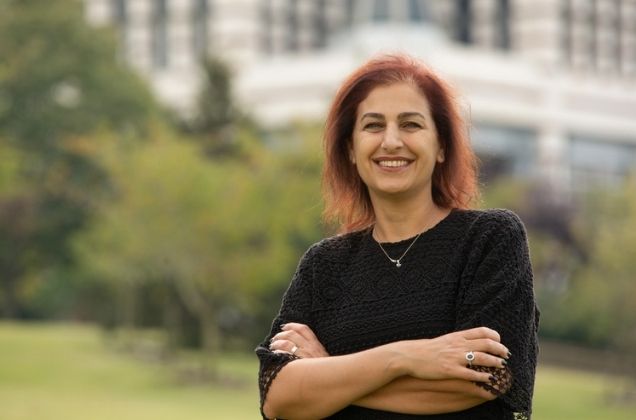
Professor Canan Atılgan, a faculty member in the Materials Science and Nano Engineering Program at Sabancı University's Faculty of Engineering and Natural Sciences, is a respected scientist recognized nationally and internationally for her work in polymer and protein dynamics and the theoretical and computational investigation of complex molecular systems. However, beyond the classical "laboratory-focused" academician profile, she connects science with a wider audience through her work in teaching methods, science communication, and popular science, and contributes to innovative teaching models.
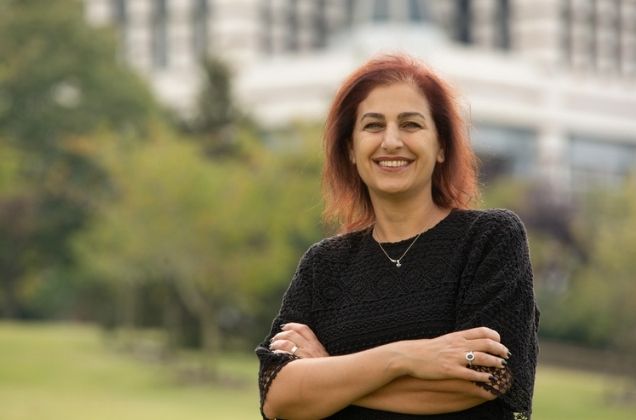
Dr. Atılgan is not just a faculty member at Sabancı University; she is one of the founding academics who contributed to the establishment of the university's educational philosophy and academic structure. She played a critical role in the development of the Materials Science and Nano Engineering Program's current structure by contributing to the development of its academic infrastructure.
Canan Atılgan also contributes to new teaching techniques; she was part of the team that first implemented increasingly common paradigms, such as student-centered learning and flipped classroom techniques in Türkiye. Furthermore, her explanatory, descriptive, and communicative articles on the Science Academy's popular science website sarkac.org are concrete indicators of the bridge Atılgan is trying to build between science and society.
Polymer and protein dynamics
We asked Atılgan how she could explain polymer and protein dynamics to someone – like me – who knows nothing about the subject. Here's the answer:
“Polymers are chain molecules formed by addition of thousands of building blocks made up of specific atoms; proteins, on the other hand, are biological polymers made by nature, whose building blocks have been defined by evolutionary processes. Polymer dynamics is a field that studies how the time-dependent movements of these molecules determine the behavior of the system at every scale. We investigate how these chains twist and intertwine, how flexible they are, or how they react to their environment. Investigating these dynamics involves a wide range of applications, from designing polymeric materials for new applications to developing mechanisms to interfere with biological functions within cells.
We conduct our research under the Materials Science and Nano Engineering (MAT) Program. However, we have many collaborations across disciplines because we are in an interdisciplinary field that extends from materials design to biology, physics, chemistry, and health research.”
Protein Dynamics and Antibiotic Resistance
Regarding the question of how she established a connection between protein dynamics and antibiotic resistance, she answered:
“In many cases, the structure of the protein that has gained resistance through point mutation is exactly the same as that of the susceptible one; you cannot explain the source of resistance if you only look at the static structure. But when you study at the dynamic behavior, that is, which movements are facilitated in the drug binding pocket, which interactions last longer, or which transitions are made more difficult, it becomes clearer how mutations reduce the effect of the antibiotic. In our different studies, we have shown that resistance cannot be explained solely by decreased drug affinity, but that the energy landscape of the enzyme is altered by changing mutation-antibiotic interactions and binding-dissociation times. There is no single mechanism that explains resistance – nature uses dynamic movements to do whatever is necessary for the bacterium to live just a bit longer! Completely different mechanisms can be effective for different mutants of the same protein; the only thing they have in common is playing with dynamics. That's why the surprises we encounter along the way make our research so enjoyable.”
So, is there any hope for a new antibiotic that doesn't show resistance to antibiotics? She answered our question with a scientific perspective:
“Science always promises hope! But now we know that the issue is not finding a miracle antibiotic that bacteria will never develop resistance to. A more realistic approach is to better understand resistance mechanisms, target alternative ones, and even design drugs specific to certain mutations. Also, today we are not only looking for solutions in antibiotics; non-antibiotic biological approaches, such as phages, which are viruses that infect only the target bacteria, also have serious potential. Yes, there are promising developments, but the current antibiotic line is still not strong enough. Therefore, it is necessary to consider new drugs, alternative treatments, understanding resistance mechanisms, and the rational use of antibiotics altogether.”
The Decisive Factor in Resistance
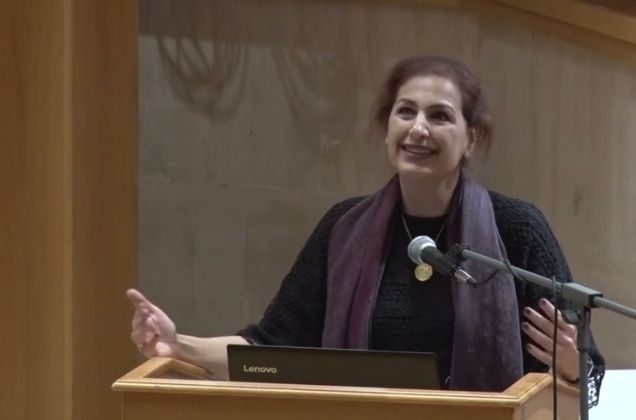
We asked about the reactions following the publication of her studies, conducted in collaboration with Dr. Erdal Toprak from UTS Southwestern University, in Nature Communications:
“We have passed an important stage in this collaboration. Based on the knowledge that dynamic behavior, rather than structural differences, is the determining factor in resistance, we have proven that the most resistant pathways that bacteria select during evolution can be bypassed using a drug derivative we proposed. This study, which we published in Nature Communications, is attracting considerable attention in the field. Now we are taking this approach to a larger scale. In our new studies, we aim to evaluate the results of numerous changes more quickly and systematically by combining deep mutational screening experiments that interrogate the effect of thousands of single mutations in parallel with computational methods. In this way, we are transferring what we have learned from dynamics in the past to a research program with larger output and greater predictive power.”
Presidency of the Academy of Sciences
She described what contributions she made to the Science Academy during her presidency term spanning 2021 to 2024 as follows:
The most important issue for me was contributing to the institutionalization process as the Academy celebrated its first ten years. In this context, I spearheaded the revision of the Declaration of Academic Merit, Freedom and Integrity statement, signed by all academy members as well as the recipients of the BAGEP awards, which recognizes the achievements of young scientists; we expanded the document to define the scientist not just through their academic output but also by the care and responsibility they show towards the scientific work environment. This approach emphasizes that unethical, discriminatory, intimidating, or power-abuse-based behaviors are not to be ignored.
Furthermore, as part of the 100th anniversary of the Turkish Republic, we published the book "In the Field: Science and Women in the Foundation of the Republic", and following the 2023 earthquakes, we opened up discussions on the role of science in preventing the consequences of disasters through events and publications. Our book, "Science Academy Earthquake Discussions: We Can Do Much Better!", is a product of these efforts. During the same period, we created a significant fund for the sustainability of the Academy. Increasing the visibility of the problems faced by women in academia, developing solutions for these problems, and being a role model for girls in science were also among my priorities.
The biggest challenge I faced during this period emerged in the effort to define the responsibility of a scientist more broadly. Overcoming the entrenched mindset that ‘If a professor is a good scientist, we should not concern ourselves with their other behavior’ was not easy. I also faced some resistance stemming from the work culture towards female leaders. Another significant turning point was the necessity of rethinking all the plans we had made for the 100th anniversary of the Republic due to the February 2023 earthquakes. However, we took this not as an obstacle, but turned it into an opportunity to address them both; for example, we structured the Conference of the Year within a new framework that considers the relationship between cultural heritage and disasters, from the past to the future.”
Artificial Intelligence and the Teaching System
We asked her about her predictions regarding what changes might occur in a teaching system with the advancement of artificial intelligence:
“I think the most important change has been the rapid lowering of some technical thresholds, such as coding. I experienced this very concretely in my own classes. For example, in the molecular modeling course that we have been teaching since the very beginning of the MAT program, we were examining molecular systems with undergraduate students who were not very keen on coding, emphasizing the physics underlying the problem and using only Excel when necessary. When artificial intelligence reduced the psychological barriers to coding, I completely changed the curriculum of this course. Now, students can discuss in depth why the systems they simulate behave the way they do and how they can explain experimental findings without worrying about coding. In the last few years, many professors have had similar experiences; many of us have restructured our courses taking this new situation into account.
But I think the main issue is not just the breakthroughs in artificial intelligence. I define a professor as someone who guides learning. In my university years (before the internet!), access to information was very limited, and the professor's own experience would broaden our worldview and they would guide us in developing methods to access that limited data. Today, there is an abundance of information, and accessing it is no longer a problem. It has become the duty of today's professor to guide our students, who will be the professionals of the future, to sift through this information overload and identify the knowledge needed to solve the problems at hand.”
Quantitative Assessment in Universities
The question of how the quantitative approach and corporatization trend in universities worldwide affect developments in science education has become a vital issue in recent years. We asked how higher education institutions are affected by this trend:
“Unfortunately, this approach emphasizes reducing education and research to measurable outputs. When indicators such as the number of publications by a professor, project budget, and the institution's ranking become ends in themselves rather than the means, the space for depth, curiosity, critical thinking, and free discussion in science education and research narrows. Research quality is negatively affected from this; instead of long-term, risky, but original studies, projects that yield quick results take precedence; many researchers praise each other while conducting similar studies and ‘rise’ in the indicators. The situation in higher education institutions in Türkiye largely follows the same parallel; in fact, these pressures are sometimes felt even more deeply due to problems of institutional autonomy and academic culture.”
Who is Canan Atılgan?
Canan Atılgan, a member of the Science Academy Türkiye, received her undergraduate and doctoral degrees from the Department of Chemical Engineering at Boğaziçi University in 1991 and 1996, respectively. Between 1996 and 1999, she conducted postdoctoral research at the Supercomputer Computations Research Institute at Florida State University. She has been a faculty member at Sabancı University since 1999. She served as the Dean of the Faculty of Engineering and Natural Sciences from 2018 to 2020 and as the President of Science Academy Türkiye from 2021 to 2024. She is an elected member of the European Molecular Biology Organization (EMBO) and Academia Europaea.


